of U.S. high school students experienced persistent feelings of sadness or hopelessness in 2025.
CDC · 2025GIGI'S VOICE · LIVED EXPERIENCE
Finding My Voice Again
A personal space about surviving emotional and mental abuse, recognizing what can be hard to see from inside it, and finding a path forward.
GIGI'S VOICE · SOUND OFF
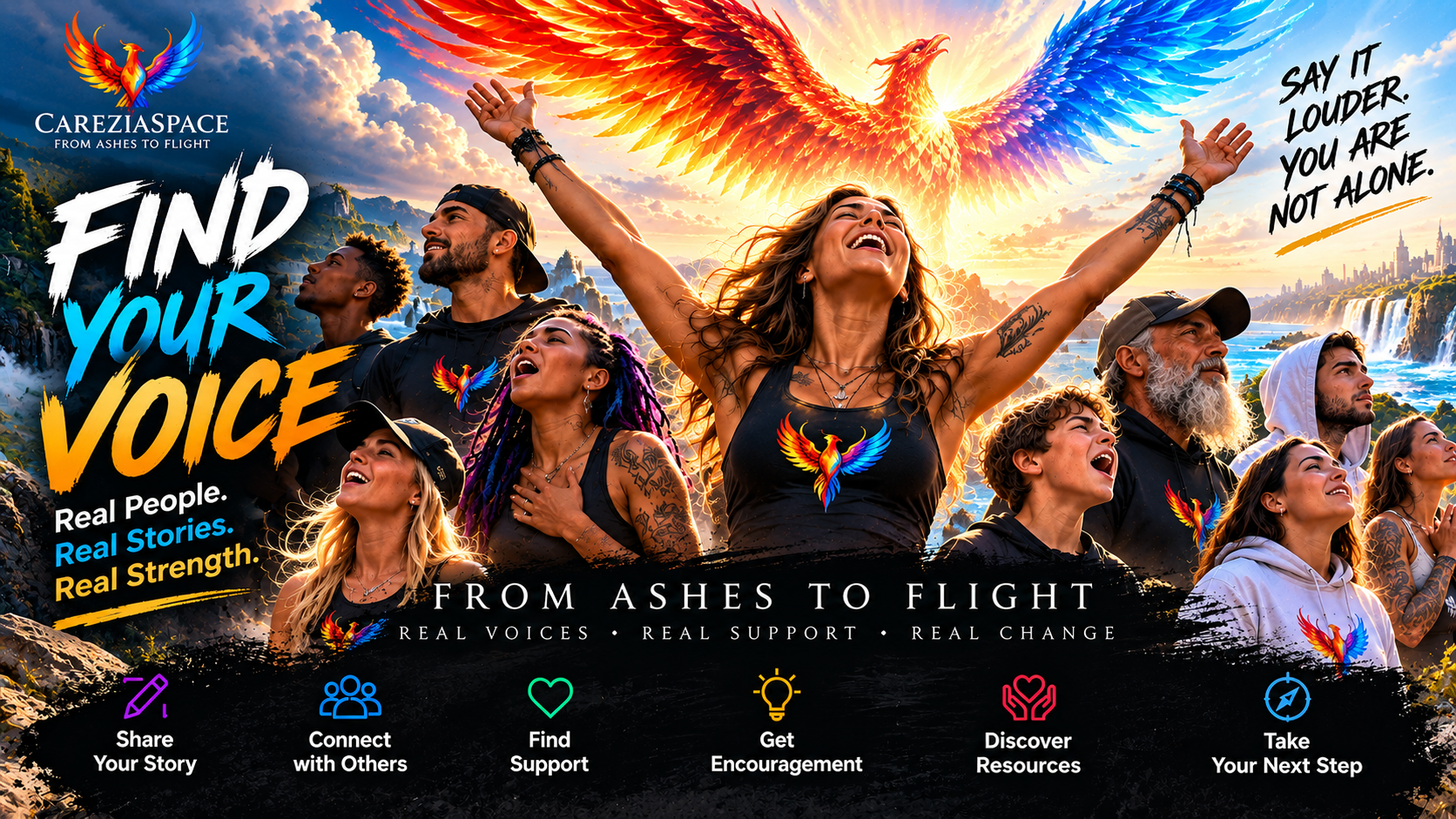
Find Your Voice. Sound Off.
Rise from what tried to silence you. Share your voice, your strength, and your path forward.
SHACKLES TO FLIGHT · FOUNDING LIVED EXPERIENCE CONTRIBUTOR
Gigi’s Voice — Finding My Voice Again
Real people. Real experiences. Finding a way forward.
Gigi is helping open Rebound’s Lived Experience community by sharing from her own journey and welcoming other people who want their experiences to help someone else. She represents lived experience and peer perspective—not counseling or clinical care. Her own story, image, and identifying details appear only as she chooses to share them.
JOIN GIGI’S VOICE
Find Your Voice. Join Your Voices. Sound Off Together.
Your experience matters. Share what you’ve lived through, what you’ve learned, and what helped you move forward. Use your real name, a chosen name, or stay anonymous. One voice can help another person find theirs.
Add My VoiceLived-experience notice: Gigi is sharing personal experience and peer encouragement, not acting as a therapist, counselor, advocate, or crisis professional.
YOUR VOICE · YOUR CHOICE
Take a Minute. Let Your Voice Be Heard.
You do not have to tell your whole story. Start with the part you want heard. Speak it or write it, and choose whether you use your name, a chosen name, or stay anonymous.
AnonymousChosen nameMy namePrivate or submitted for review
WHY VOICES MATTER · VERIFIED NATIONAL DATA33% 23.8% 63.4%
The need is real. So is recovery.
of young adults ages 18–25 had a substance use disorder in the past year in 2025.
SAMHSA · 2025of young adults who said they had ever had a drug or alcohol problem considered themselves in recovery or recovered in 2025.
SAMHSA · 2025National statistics describe populations, not any one person. Sources open directly so the numbers can be checked.
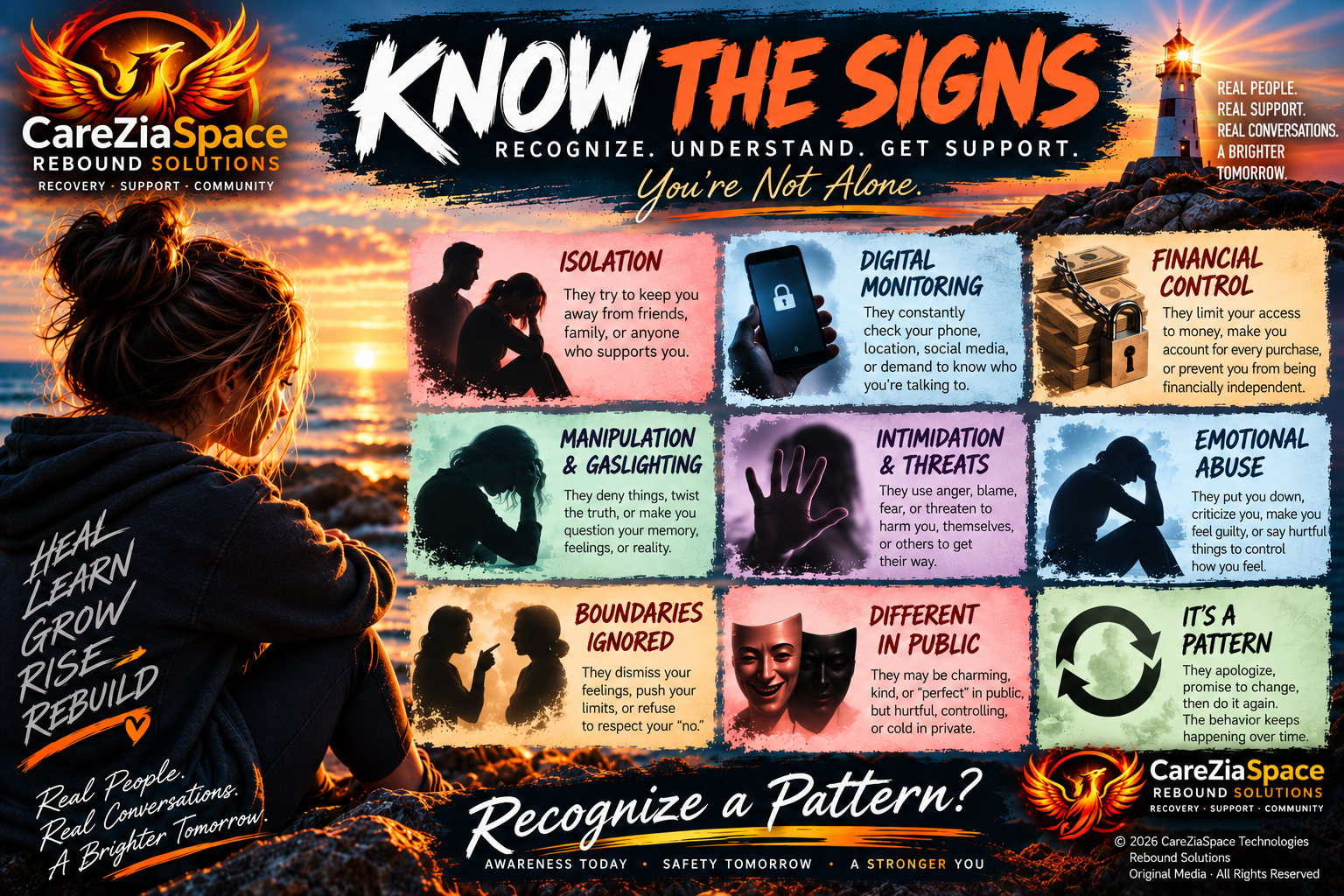
Recognize It
Emotional abuse can include repeated belittling, intimidation, isolation, controlling behavior, manipulation, monitoring, threats, or making someone repeatedly doubt their own memory or judgment.
Understand It
Abuse does not have to leave a physical injury to matter. A pattern of emotional or psychological control can affect confidence, relationships, decision-making, and a person's sense of safety.
Find Your Voice
Gigi's story is shared here in her own words. Her experience is not a diagnosis or professional counseling; it is one person's lived experience offered so others may recognize that they are not alone.
Build Boundaries
Explore practical next steps: identify trusted people, protect private information, decide what contact feels safe, and seek professional or advocacy support when you want it.
Get Support
You choose what happens next. Rebound connects you with verified crisis, domestic-violence, sexual-assault, mental-health, and community resources without requiring you to tell us your private story.
Move Forward
Recovery can include rebuilding confidence, independence, relationships, routines, and a sense of self. There is no required timeline and no single path.
LIVED EXPERIENCE · YOUR CHOICE
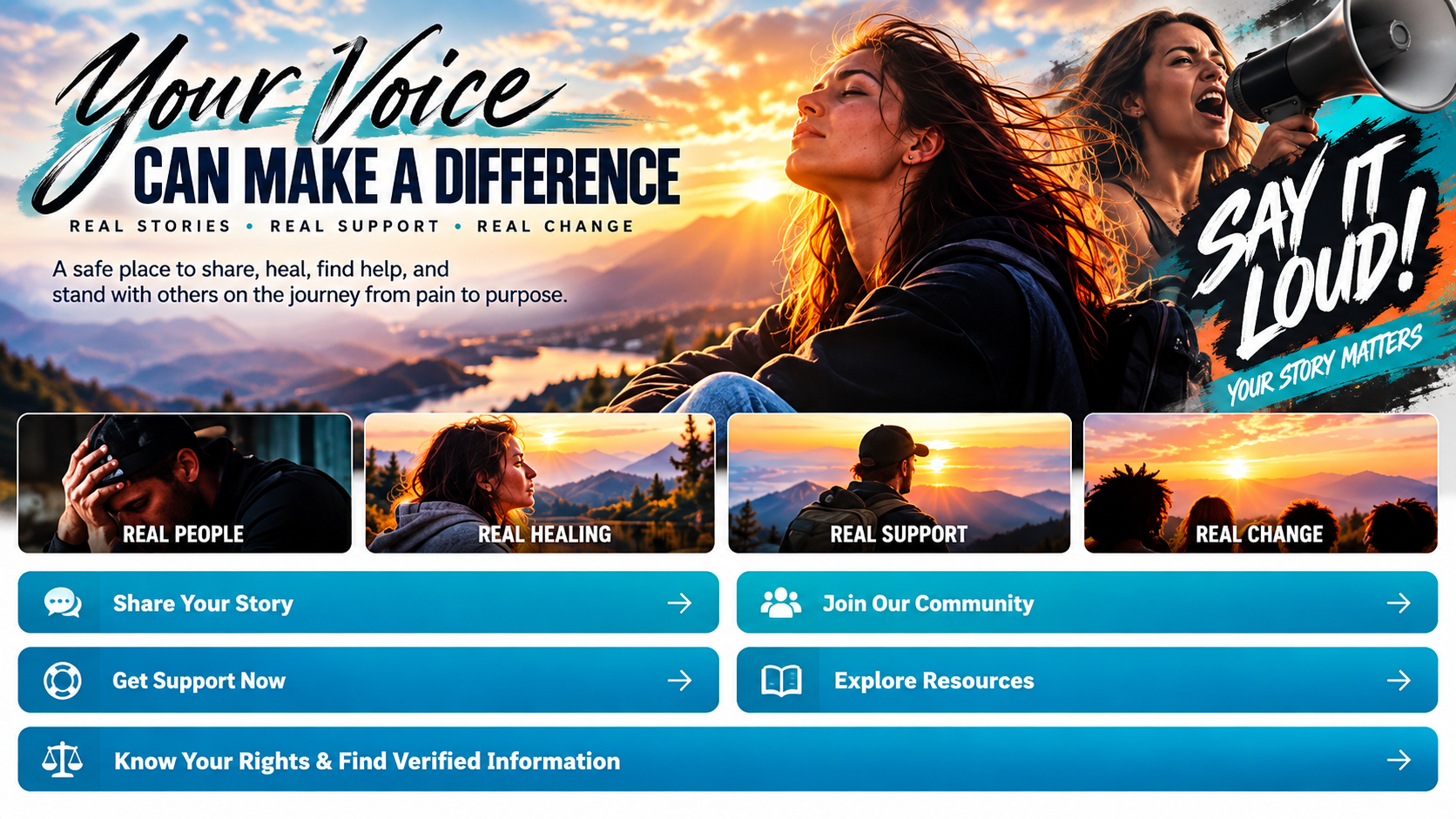
Share Your Story
What you lived through may help another person recognize what is happening, feel less alone, or find the courage to take a next step. Share only what you choose. Use your real name, a chosen name, or remain anonymous.
Add My VoiceYOUR VOICE MATTERS
Real People. Real Stories. Real Change.
Finding your voice can be part of rebuilding. Listen, believe, support, and use the pathways above whenever you or someone you care about needs a next step.
Need help safely?
If you are in immediate danger in the United States, call 911 when it is safe to do so. Outside the United States, use your locally confirmed emergency number. You can also use the confidential and official support options below.
Open urgent supportAbuse & safety resources
VA National Center for PTSD
Official PTSD information, treatment education, and tools for Veterans, families, and the public.
Official VA resourceNational Domestic Violence Hotline
Free, confidential support, safety planning, and connections to local domestic-violence services.
Free · confidential · 24/7RAINN National Sexual Assault Hotline
Free, confidential support for survivors of sexual violence and the people who care about them.
Free · confidential · 24/7